BetUS

BetNow

MyBookie

Bet105

BUSR Sports

Everygame Sports

BetOnline

BetWhale

BetAnything

Xbet

Bovada

Bookmaker
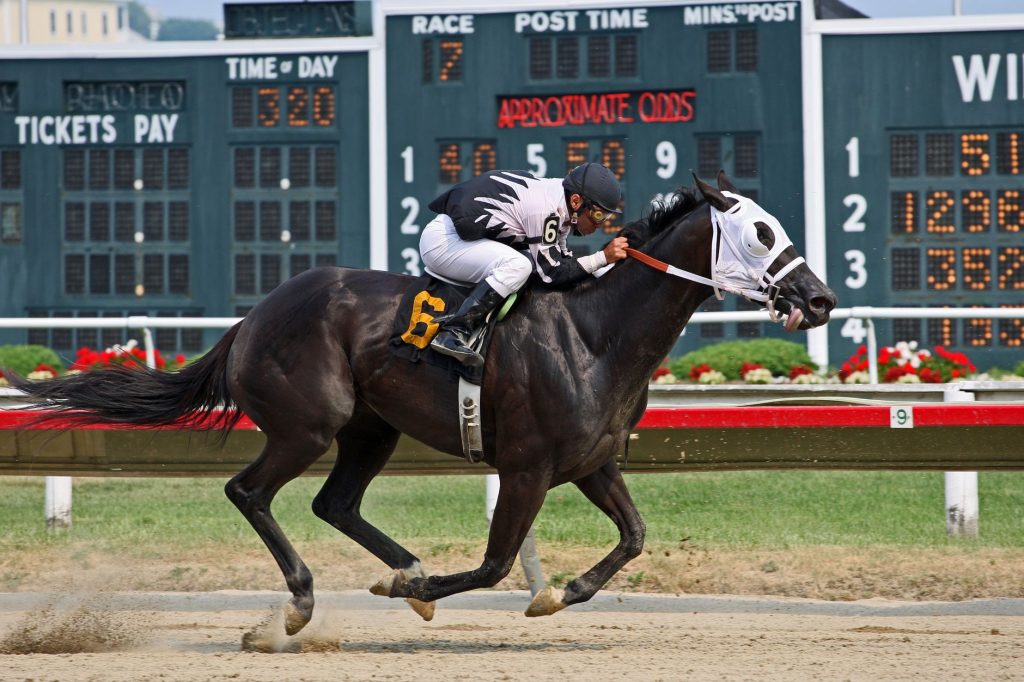
Standing before the board can feel like decoding a secret language.
A newcomer pauses before the odds board — dozens of numbers, fractions and colours colliding with curiosity and unease. That sensory overload often leads to quick, emotional choices: backing the favourite, misreading decimal odds as probability, or ignoring the bookmaker's margin.
Those impulses cause many early mistakes, but they are fixable. With a few routine habits — translating odds into implied probability, comparing markets, and explicitly accounting for the vig — the board becomes a practical map rather than a trap.
Read any posted price: fractional, decimal and American explained
- Fractional (5/1)
Shows profit relative to stake: 5/1 means a £1 stake wins £5 profit and returns £6 total. Common in UK racing and older price boards.
- Decimal (6.00)
Shows total return per unit staked: a 6.00 pays £6 for every £1 staked. Convert from fractional by dividing then adding 1; implied probability = 1/decimal.
- American / Moneyline (+500, −200)
Positive (+) is profit from a $100 stake; negative (−) shows stake required to win $100. Convert to decimal: +A → (A/100)+1; −A → (100/|A|)+1.
- Fast mental conversions
Fractional X/Y → decimal = (X/Y)+1. Decimal → implied % ≈ 100/decimal. For American, remember + means ‘divide by 100’, − means ‘100 divided by the number’ for the same idea. For a stepwise trick, see the fast method to convert fractional to decimal odds.
- When a calculator is wiser
Use precise tools for parlays, margin-adjusted probabilities, tight lines, or many conversions — mental math is fine for quick checks but not for money-critical decisions.
Quick rule: rely on mental shortcuts for casual reading; use a calculator when stakes or multiple lines matter.
Use a calculator for parlays, arbitrage checks, or converting many prices. Double-check big negative moneyline values and implied probabilities if value is marginal.Better safe than sorry: a few seconds with a calculator beats a costly misread.
Main betting markets and how to pick one
Market overview
Five markets dominate most betting activity: moneyline, point spread, totals (over/under), proposition bets (props), and futures. Each behaves differently because odds reflect distinct questions — who wins, by how much, whether a total is exceeded, isolated events, or long-term outcomes — and different levels of information and liquidity.
- Moneyline: Simple win/lose pricing. Odds move on late information and sharp money; big favorites often carry low value unless probability edges exist. See the moneyline vs point spread breakdown when weighing margin vs outright picks.
- Point spread: Lines aim to split the market. Spreads often show smaller margins and tighter books; prices shift as books balance liability.
- Totals: Sensitive to weather, injuries, and pace stats; useful for bettors who model game flow.
- Props: Many niche markets with higher variance and softer lines — profitable for specialized research.
- Futures: Long horizon, larger margins, and big swings; patience and bankroll planning matter.
Choosing a market
Match market to informational strength and temperament. Prefer spreads or totals when edge comes from statistical models; prefer props when deep niche research is available; use futures for patient bettors with conviction. For risk-averse players, smaller stakes on totals or selective spreads suit steadier returns. Always check liquidity and shop lines before committing.
From odds to true chances
Convert odds to implied probability
Every quoted price encodes an implied probability — the market's stated chance of an outcome. Use these quick formulas: decimal: implied = 1 / decimal. fractional (A/B): implied = B / (A + B). American: if positive (+A) implied = 100 / (A + 100); if negative (−A) implied = A / (A + 100). For example, decimal 2.50 → 40%; fractional 3/2 → 40%; American +150 → 40%.
For more worked examples with American odds like +150, see the guide to reading implied probability.
Bookmaker margin (vig or overround)
Bookmakers add a margin so the sum of implied probabilities exceeds 100%. That excess is the overround (vig). For a two-outcome market:
- Convert each price to implied probabilities.
- Add them; subtract 1 (100%). The result is the vig.
Example: odds 1.80 and 2.00 → implieds 0.5556 and 0.5; sum = 1.0556 → vig = 0.0556 (5.56%). To estimate true chances, divide each implied probability by the sum (0.5556/1.0556 = 52.6%).
For a step‑by‑step method to compare prices across books, consult the walkthrough on calculating vig.
Formulas
Decimal: 1 / decimal Fractional A/B: B / (A + B) American +A: 100 / (A + 100); −A: A / (A + 100)Two-outcome vig
Get implied probs. 2. Sum them. 3. Vig = sum − 1. 4. Fair prob = implied / sum.What moves a betting line?
Betting lines change for a few predictable reasons. Primary drivers are public vs sharp money, news and injuries, model updates, and liquidity/timing. For a focused walkthrough of early price shifts, see the detailed explainer on pregame price shifts.
- Public money: lots of small wagers push lines toward popular sides; movement is often gradual and favors favorites.
- Sharp money: larger, selective stakes from professional bettors can cause quick, sustained moves even at multiple books.
- News/injuries: confirmed lineup or weather changes produce immediate, directional swings.
- Model updates: advanced models recalibrating probabilities create subtle but consistent adjustment across correlated markets.
Typical movement patterns that signal information
- Fast, sustained moves late and matched across books often indicate sharp action.
- Slow drift early, especially toward one-sided public sentiment, suggests recreational money.
- Isolated, tiny ticks without volume or corroborating markets are usually noise.
- Cross-market confirmation (totals, side, props moving together) increases confidence that the move reflects real information rather than whim.
Before placing money:
Confirm the model's confidence band (tight vs wide). Ensure edge exceeds a minimum threshold (e.g., 3–5%) when uncertain. Check for recent news or market moves that might invalidate the estimate. Use conservative stake sizing (small flat stakes or fraction of Kelly) until the model proves itself.Sizing stakes: units, proportional rules and Kelly
Sensible stake sizing turns an edge into long‑term profit and prevents short‑term variance from destroying a bankroll. Common hobbyist methods:
- Flat units — bet a fixed unit each pick (easy bookkeeping). Ideal for learning and comparing tips.
- Proportional staking — risk a fixed percentage of current bankroll (e.g., 1–3%). Stakes scale with wins and losses.
- Kelly criterion — sizes bets to maximise long‑term growth given an edge; mathematically optimal but volatile.
A practical compromise is half‑Kelly (or another fraction): captures most growth while greatly reducing drawdowns. For calculations and worked examples, consult a practical Kelly walk‑through.
Practical rules: record units, cap maximum percent of bankroll, round stakes to usable amounts, and avoid sudden increases after wins. Proper sizing preserves capital, smooths variance and lets small edges compound.
Start conservative.
Use 0.5–2% of bankroll per bet for beginners or 1–3 unit flat systems. Consider half‑Kelly for mathematically informed but safer sizing. Reassess unit size after large changes in bankroll.Tactical plays: four quick tools
Four tactical plays can change how risk and timing are handled: live betting, arbitrage, hedging, and cashing futures.
Live betting. Placing bets during an event to exploit momentum swings or slow market reactions. Helps when new information arrives midgame and books lag; main downside is execution risk — prices move fast and latency or slow judgment can erase edges. See a deeper take on live betting tactics.
Arbitrage. Simultaneously backing all outcomes across books to lock a profit. Useful when bookmakers disagree and stakes fit available limits; downside is very small margins, cancellations, and account restrictions that limit scale. Learn how to find arbitrage bets.
Hedging. Taking an opposing position to lock gains or reduce variance. Best when a position has shifted in value or to protect a big lead; downside is lower ROI and extra fees if timed poorly. Read how to hedge a sports bet.
Cashing futures. Selling or cashing out long-term bets midseason to capture value or cut losses. Helps with bankroll management and updated forecasts; downside is giving up potential upside. Guidance on when to cash out futures.
Quick tradeoffs: guaranteed small returns vs potential large upside, execution speed vs research time, and account complexity vs simplicity.